
Coming Home
Why the World Cup will always be bitter-sweet for me.

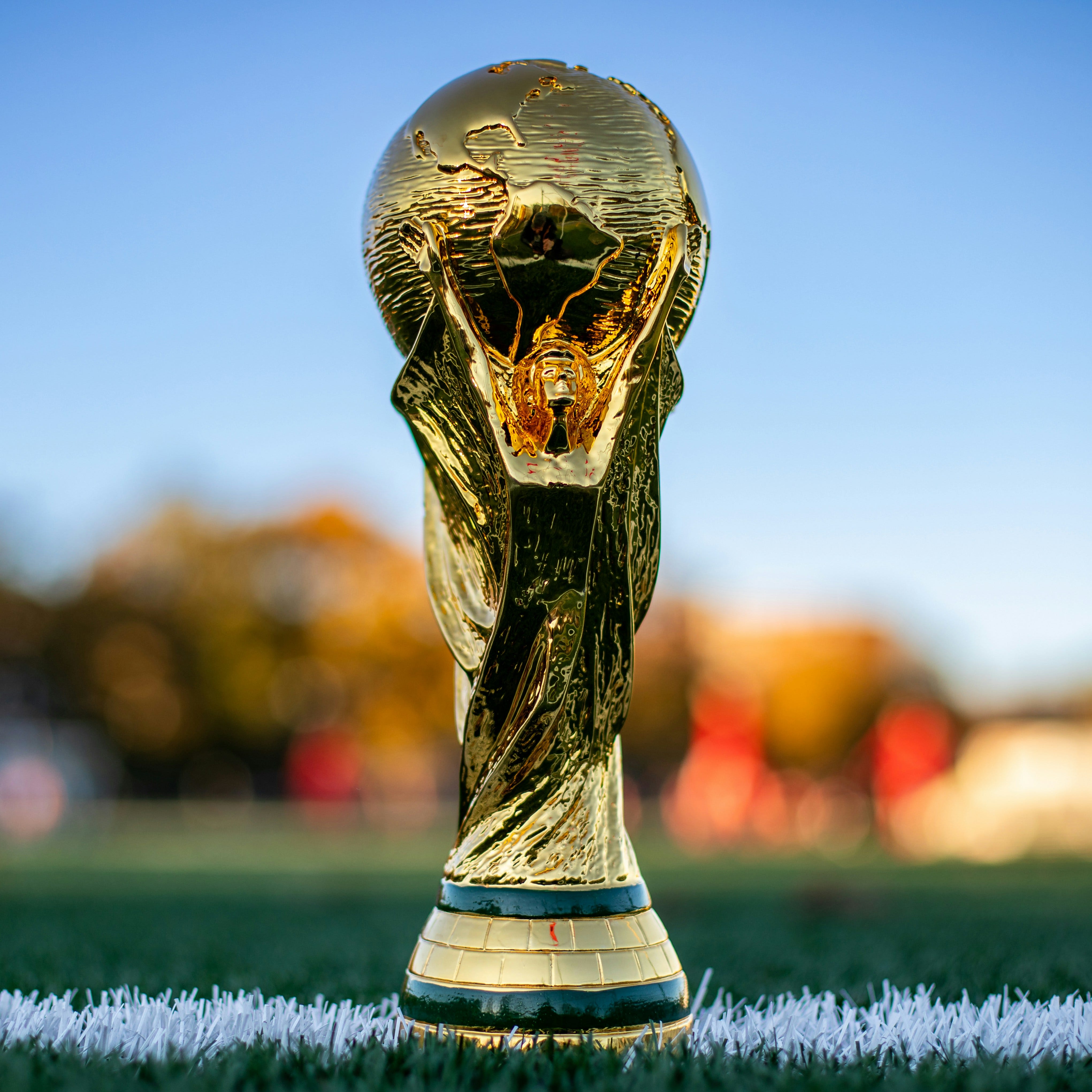
England are playing Argentina at the World Cup. Every four years, the tournament brings back memories of the very first World Cup I was ever truly invested in. The excitement of watching England perform in a World Cup for the first time since I’d been old enough to engage with the sport has never left me. But England vs Argentina always stirs up very specific memories for me. Memories I would rather leave in the past.
As a 13-year-old, France 1998 would set me and the rest of my peers up for a lifetime of disappointment as an England fan. But the thrill and the adrenaline of watching that last 16 game against Argentina, even though we lost, was undeniable. Being only dimly aware of Maradona’s antics in 1986, and the political backdrop of the Falklands war, this game renewed the rivalry for a new generation of football fans. Batistuta’s and Shearer’s penalties, Zanetti’s cleverly worked free kick routine, punctuated by that wonder goal from an 18-year-old Michael Owen, left the tie neatly poised before Beckham got himself sent off. Still, we (and it was ‘we’, not ‘they’, by this point) struggled on through extra time to penalties, where we eventually succumbed – a pattern that would repeat itself over and over throughout the tournaments of my youth.
I find the arrival of each World Cup cathartic. Each time the tournament rolls around it acts as a marker, a catalyst for me to remember where I was and what was happening in my life as I shared these collective moments with the nation. But those extra-footballing memories, especially those triggered by England vs Argentina, are always tinged with melancholy for me. They take me back vividly to the moments before and after the death of my best friend, Nick, during the World Cup of 2002. And when I reflect on World Cups past, this is inevitably where I end up fixating.
Nick and I were both ardent followers of domestic football. Nick was a huge fan of Manchester United, while I, indoctrinated by my dad against the sway of almost all my friends, supported Manchester City. I had been to Old Trafford with Nick a few times over the years, when his dad’s seat in the South Stand was going spare. More recently, since we got season tickets at Maine Road, Nick had come a few times to sit next to me in the Main Stand to watch as City battered sides in the First Division when my dad couldn’t make it.
Usually the animosity between City and United fans would have made this sort of thing difficult, but Nick and I were tight enough that we never let our support of rival teams get in the way of watching a game. Instead, we learned to live behind enemy lines, standing when the home fans stood and pretending to celebrate our rivals’ goals so as not to stand out too much among them, although neither of us could ever muster the full shouting-arms-in-the-air-fist-clenching celebration that the other would exhibit at home games. It was a kind of truce, and it felt grown-up at the time, like we’d found a way to still be Kit and Nick, even when we weren’t allowed to be exactly who we wanted to be. And besides, with City, until that summer, a whole division below United, we weren’t even their main footballing rivals. Liverpool, Arsenal and by some reckonings even Leeds ranked above City in the pecking order of United’s antagonists; a fact that, in itself, put a huge dent in the pride of City fans of that era. But as we both saw it back then, it wasn’t as if City were ever going to be a threat to United’s seemingly unending dominance of English football, was it?
City had just won promotion back to the Premier League, so we faced the prospect of that fierce rivalry being renewed, with those much-missed Manchester derbies back on the table. But that summer was a time for putting domestic rivalries to the back of our minds and focusing on our joint support of the national team.
In truth, the end of the domestic season and all the international football that followed that summer was overshadowed by Nick’s illness. Just a few months before, Nick had been diagnosed with familial adenomatous polyposis, a genetic condition which made cancer much more likely. And just a few weeks after that, we had been told that the gastrointestinal cancer he had indeed developed was terminal.
It was barely believable. The transformation from the vivacious young lad who had bested me in a kick-up competition in my back garden in April, all the twists and turns of life seemingly in front of him, to the cancer patient who lay dying in June, ferried between his bedroom and hospital, was almost too surreal to wrap my head around.
I went to see Nick both in hospital and at home while he was ill. The last time I went to see him was on the 7th of June, the afternoon of England’s group game against Argentina. He was so unwell that I felt I was trespassing on his time, forcing him to be social when probably all he wanted to do was sleep. We discussed the upcoming match and he told me how he was looking forward to watching it, but our conversation was stilted and felt forced.
What did we have to talk about: these two seventeen-year-olds who were now on such radically different paths? I tried some reminiscences, but they all seemed to fall flat. What do you talk about with a teenager who is about to die? How pissed off you are that you are going to lose your best friend? How cheated you feel for them that they will never get to live out their dreams? How you will try to honour them in the way you conduct yourself throughout life as your timeline continues while theirs is cut abruptly short? I couldn’t get the words out.
I found the whole experience so upsetting that I am ashamed to say I didn’t see him again before he died. I told myself it was because he wouldn’t have been able to muster the energy to see me and that I didn’t want to intrude on his final moments with his family. And maybe this was true in part, but we had been closer than brothers. He was my family. Secretly, my excuse was just a lie I told to comfort myself because I was too afraid to look my best friend in the eyes as he lay dying.
Richard, Nick’s dad, told me later that Nick barely managed to watch any of the Argentina match. Nick did manage to catch Beckham’s penalty, Richard told me, and held his fist aloft when the final whistle blew, celebrating an act of revenge which went some way to undo the hurt of that first indoctrinating match in 1998. The victory was ultimately crucial in securing England’s qualification from the group stages, so that we could face Denmark in the round of 16.
He didn’t get to see that game. On the 12th of June, Nick died in hospital, surrounded by his family. I watched England beat Denmark and then lose to Brazil in the quarter-finals. It didn’t really matter. There wasn’t much that really seemed to matter that summer after Nick had died.
Now, whenever the World Cup kicks off, I think of Nick lying on his sickbed, punching the air, and am reminded of that internal battle I faced as a 17-year-old. The battle that, to my eternal shame, I won and lost.
Beautifully put.
Cory's adaptation of the Callimachus elegy welled up from the depths of my memory:
“They told me, Heraclitus, they told me you were dead,
They brought me bitter news to hear and bitter tears to shed.
I wept as I remembered how often you and I
Had tired the sun with talking and sent him down the sky.
And now that thou art lying, my dear old Carian guest,
A handful of grey ashes, long, long ago at rest,
Still are thy pleasant voices, thy nightingales, awake:
For Death, he taketh all away, but them he cannot take.”
Beautifully written piece. 💕